About
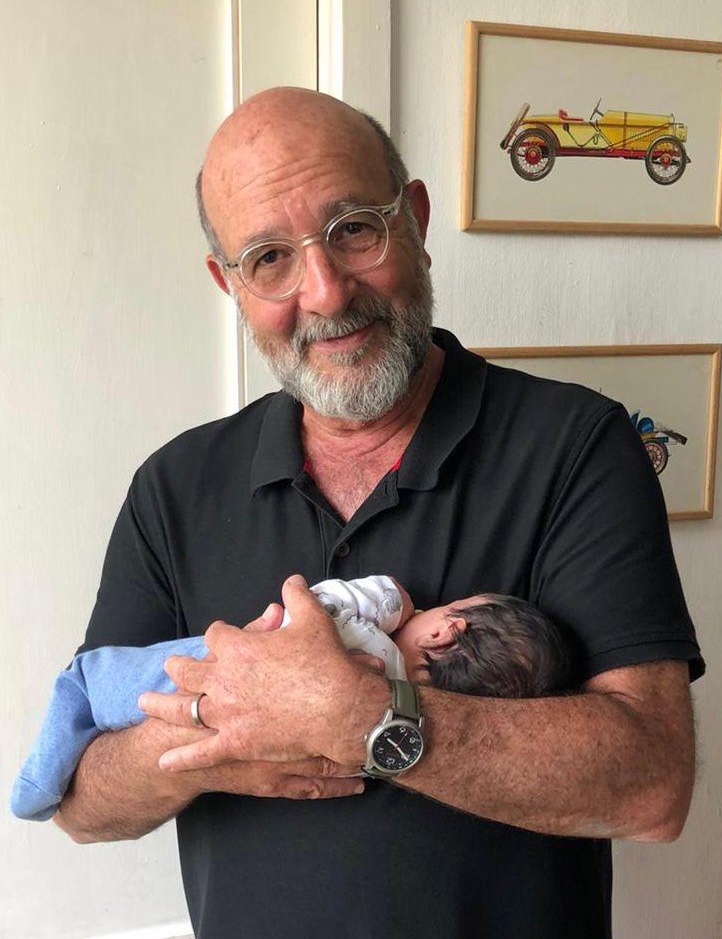
Member, Israel Psychological Association · Certified as a supervisor in psychotherapy to practice in Israel (1995) · Certified as a Clinical Psychologist to practice in Israel (1993) · Certified as a Psychologist (No. 3173) to practice in Israel (1989) · Certified as a Psychologist to practice in the Province of Alberta, Canada (1988) · Ph.D., Clinical Psychology, University of Calgary, Canada (1988) · B.A., Psychology, Hebrew University of Jerusalem (1979)
I am David Senesh, and some people call me Dudi or Dudu.
I have been a specialist in clinical psychology since 1989 and a certified supervisor in psychotherapy since 1995. I studied undergraduate and graduate psychology at the Hebrew University of Jerusalem and completed my Ph.D. in clinical psychology at the University of Calgary in Canada, followed by two years of pre- and post-doctoral internships in Canada and the USA. The seven years I spent in Canada shaped my professional outlook. It was there that I first encountered the ways their First Nations (Indigenous communities) approach conflict and the repair of harm, what is known today as restorative justice. Following two research expeditions in British Columbia and the Yukon, I deepened my understanding of how healing always happens within relationships, families, communities and cultures, transcending the power of the single mind alone.
Upon my return to Israel, I worked in the public mental health service in Rishon LeZion, spent fifteen years as an independent psychologist affiliated with the Maccabi health fund and the Ministry of Defense, while also serving ten years as a reserve psychologist in the Israeli Air Force. I have taught and supervised generations of students and therapists: in the Department of Criminology at Bar-Ilan University, at Levinsky College of Education in Tel Aviv and its Eilat campus, and as a visiting professor at the Jewish Theological Seminary (JTS) in New York, in the pastoral program for training rabbis and caregivers in spiritual care.
At the Green Institute for Advanced Psychology in Tel Aviv I served for more than a decade on the board, as chief psychologist, and as head of supervision for the clinical residency program, including the supervision of supervisors. Alongside clinical and academic work I have given years to volunteering in various public organizations: a decade on the board of ELI, the Israel Association for Child Protection, on the board of directors of BeNafshenu, which helps secondarily traumatized persons, as well as a member of the medico-legal group of the Public Committee Against Torture in Israel, certified to document and to train professionals in the application of the Istanbul Protocol for the assessment of survivors of torture.
My research interests are constructivist and narrative psychology, cross-cultural psychology, transgenerational trauma, restorative processes, and moral resilience.
My clinic, whose home is in Jaffa, now operates online. I work in English and Hebrew, with people in Israel and Israeli expats around the world.
I am married to Ilana Weiser-Senesh, a writer; the father of Omer and Odie; and a grandfather of two. We live in Berlin and Jaffa, with strong ties to Canada.
The story and the legacy
This story is here because people ask, and because it explains the work I do. It is told once, plainly, and the rest of this site is about what was built from it.
Forty days
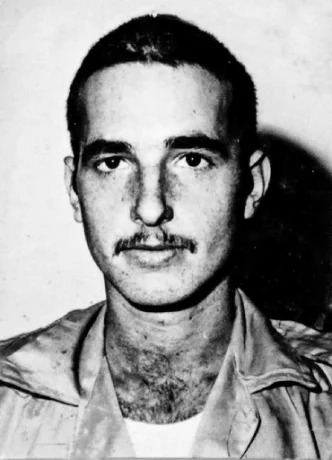
In October 1973 I was a nineteen-year-old soldier serving on the strongholds of the Suez Canal when the Yom Kippur War broke out. After days of fighting, surrounded and without proper military accountability, our small stronghold surrendered. I spent the next forty days as a prisoner of war in Egypt, in a Cairo prison, through starvation, interrogations and torture. My family did not know whether I was alive; word reached them two days before my release.
I came home to a country that called us heroes and did not know what to do with us. The war ended in what the books call victory, which was incompatible with what it really felt like; those of us who returned from captivity carried something else, a betrayal and defeat taken personally, and questions that took decades to answer. The deepest thing captivity takes is choice. What remained mine, even there, was the conversation I held with myself, and what I would eventually decide to do with all of it.
What I decided was this: if I had already paid full tuition, I would at least keep the learning. I became a psychologist. I have spent my life since treating trauma, teaching about it, and working to reduce cruelty where I can, including years of volunteer work documenting torture with the Public Committee Against Torture in Israel, whoever the victim, whoever the perpetrator. Strength, I came to believe, is not the absence of weakness. It is having power and choosing what to do with it. In recent years, some fifty years after the 1973 Yom Kippur War, as hostages and captives have again returned home to Israel, I have accompanied that reckoning publicly and professionally, out of the conviction that recovery is possible as a sense of freedom and mastery are restored.
The Senesh legacy
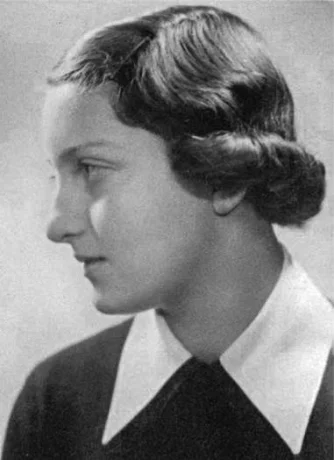
I never met my aunt. Hannah Senesh, my father Giora's only sibling, left Hungary for the Land of Israel as a teenager, wrote poems that a nation still sings, and in 1944 parachuted back into occupied Europe on a mission to help rescue Jews in Hungary. She was captured, withstood months of imprisonment and torture without betraying her comrades, and was executed at twenty-three. Her poems, among them "Blessed Is the Match" and "A Walk to Caesarea," known to many as "Eli, Eli," became part of Israel's soul.
I grew up inside that inheritance, in its shadow and in its light. Captivity runs through my family like a seam: my grandmother Catherine was held by the Gestapo in Budapest, my father spent part of the war in a fascist prison in Spain, and in my own cell in Egypt, some thirty years later, I thought of them constantly. Through her poems we know that Hannah knew how her captivity would end. I did not know how mine would. That difference, and everything we all shared in our family, has occupied me for fifty years, personally and professionally, and unfortunately was validated again in the disastrous war of 2023.
My grandmother, father and brother have all devoted much of their lives to preserving Hannah's memory and legacy, building an extensive family archive that was recently handed over to the National Library of Israel. I carry the legacy my own way: in worldwide lectures about Hannah and about what her story asks of us, in conversations with writers and filmmakers who keep returning to her, and in the daily work of a psychologist, which is, in the end, a quieter form of the same commitment. Some inheritances are a weight. This one is also a compass.
"You always live in the shadow and the light of somebody else."The Times of Israel, 2025
Writing, talks and media
A selection. Most of the materials are in English; some have been translated into other languages (German, Polish, Hungarian).